


























Photo credit: Skinfit International GmbH
The Essential Role of Amino Acids in Sports
What are amino acids and what role do they play in the body?
Amino acids are the subunits of proteins and form the basic building blocks of the body and life. They play a central role in the construction and repair of body tissue, in signal transmission in the nervous system and in metabolism. In addition, amino acids support the immune system, contribute to energy production and pH regulation, and are required for various vital physiological processes in the body.
What are the benefits of amino acids in sport?
As the basic building blocks of protein, amino acids are crucial for muscle building and tissue repair. After intensive training, they help to regenerate damaged muscle tissue and promote muscle growth. Under stress, they counteract central fatigue.
What are essential amino acids?
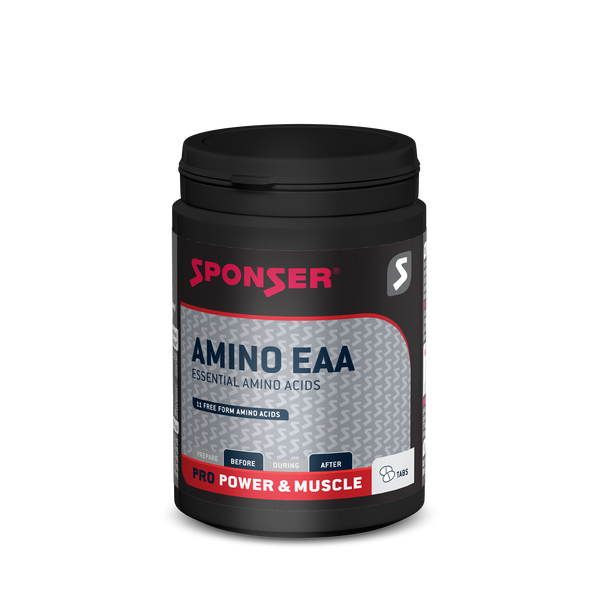
Some amino acids – the so-called «non-essential» ones – can be produced by the body itself, while others – the essential amino acids – must be supplied through food so that the body can maintain all its functions. EAAs (essential amino acids) comprise all nine essential amino acids: leucine, isoleucine, valine, lysine, methionine, phenylalanine, threonine, tryptophan and histidine.
What are BCAAs and how do they differ from EAAs?
BCAA (branched-chain amino acids) are a subset of EAA (essential amino acids) and consist only of the three branched-chain amino acids leucine, isoleucine and valine. They are not only building blocks for proteins, but also act as signal transmitters for muscle protein synthesis and are used specifically to reduce muscle breakdown during training. Leucine plays a key role in this process, as it initiates the anabolic process and thus contributes to the building and maintenance of muscle tissue. During athletic exertion, BCAAs can also serve as a source of energy. Studies have also shown that BCAAs can delay fatigue and accelerate recovery.
Amino acids in strength and endurance sports
Which athletes generally benefit from amino acid supplementation?
Taking amino acids is beneficial in all cases where there is heavy muscle strain. Typically, this means eccentric movements in strength sports, which have a catabolic (muscle-degrading) effect, or in explosive strength activities such as throwing, pushing and sprinting. Very long endurance activities also increasingly strain the body's own amino acid reserves. Targeted supplementation with specific amino acids taken close to the time of exercise can counteract this.
Do amino acids counteract muscle breakdown?
During intense physical activity, mainly during endurance or strength training, the body also draws on muscle protein as an energy source, thereby breaking down muscle. Providing sufficient energy and amino acids, for example in the form of BCAAs, can help to minimise this muscle breakdown.
Which amino acids are beneficial for strength athletes?
Strength athletes particularly value BCAAs because of their importance as anabolic signals for muscle protein synthesis, especially leucine. BCAAs can thus enhance the effect of protein, which is crucial for muscle building and maintenance. In this function, BCAAs also have a direct influence on recovery, which is of interest to all athletes.
Why is leucine particularly important for muscle building?
Leucine is an essential amino acid and acts as a central stimulus for protein synthesis. It activates the mTOR signalling pathway, which is crucial for muscle building. Studies recommend an intake of at least 2–3 g of leucine per dose to optimally stimulate protein synthesis.
How important are amino acids in endurance sports?
Certain amino acids can serve as an additional source of energy during prolonged or intense physical activity by being converted into glucose. Endurance athletes therefore benefit from taking BCAAs during exercise, as this conserves the body's own reserves. During physical exertion, the body increasingly uses BCAAs for energy as the duration increases, and if there is no supply, the body's own reserves in the muscle tissue are depleted. Declining BCAA levels also indirectly affect serotonin through their influence on tryptophan, another essential amino acid, which in turn has a negative effect on central fatigue and the perception of stress. Consuming BCAAs during exercise can therefore protect the muscles by ensuring that the BCAAs ingested through food are metabolised first.
Points to consider when taking amino acids
Why does it make sense to take amino acids separately when doing sport?
Intact proteins such as whey or casein must first be broken down into peptides and individual amino acids before they can reach the muscles. This process takes around 60–90 minutes. Compared to protein shakes, which first have to be broken down, amino acids are immediately available and place little strain on the digestive system. This is particularly important during intensive training phases or short recovery periods. In addition, essential amino acids provide all the necessary protein building blocks without additional calories.
When is the ideal time to take amino acids in sport?
Free amino acids and peptides (smaller chains of amino acids) primarily serve to shorten the time between the catabolic (muscle-breaking down) phase (which inevitably occurs after physical exertion) and the anabolic (muscle-building) phase. Amino acids and peptides should therefore be taken in a targeted manner and timed to coincide with exercise, as unlike intact proteins, they disappear from the blood relatively quickly after ingestion (approx. 30-60 minutes). In practice, this means: relatively shortly before and after or even during long periods of exercise.
When is the best time to take amino acids in strength sports?
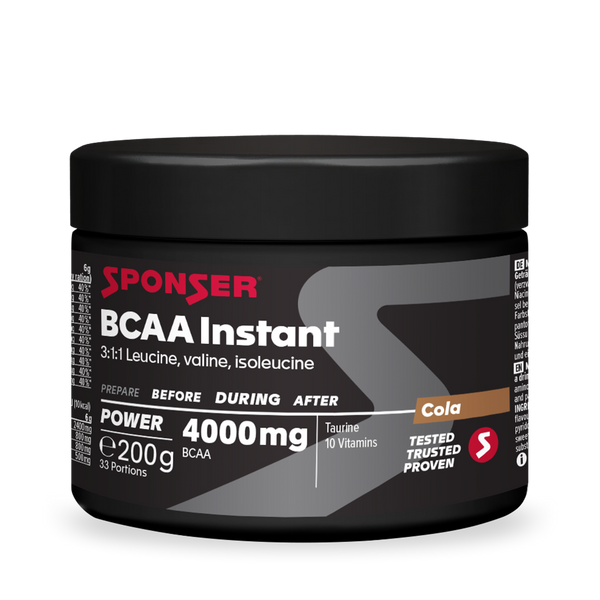
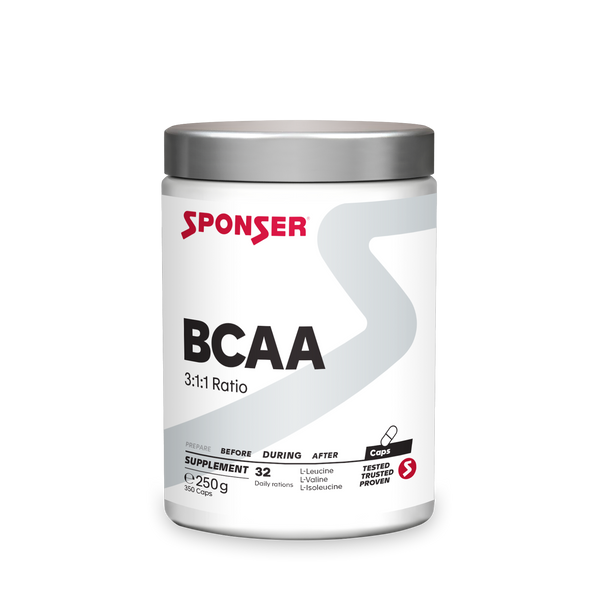
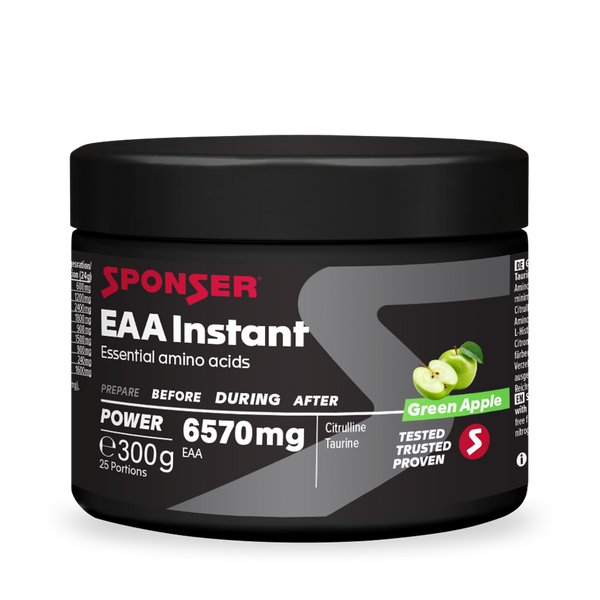
Strength athletes can take BCAAs shortly before their workout and/or add them to their post-workout protein shake. Ideally, two BCAA capsules per 10 kg of body weight. Powder products such as BCAA INSTANT and EAA INSTANT have the advantage that the dosage can be adjusted individually.
When is it advisable for endurance athletes to take amino acids during training or competition?
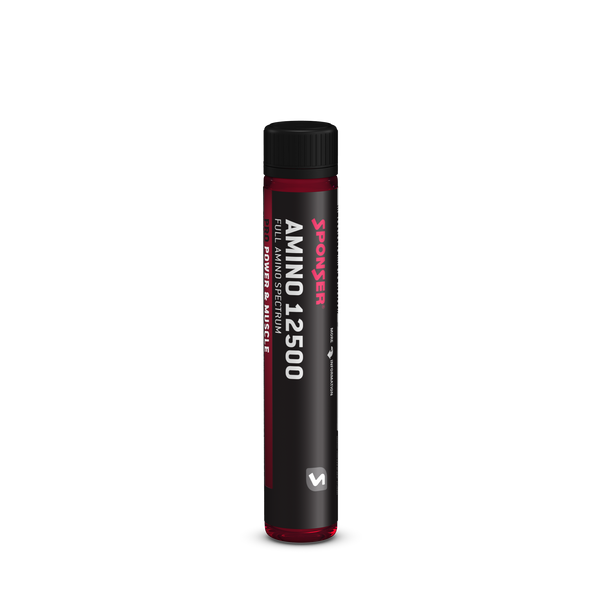
Endurance athletes may benefit from the use of BCAA during long-term endurance activities (cycling and bike marathons, Ironman, long-distance triathlons, ultra trails, etc.) and also in combination with recovery products. During long periods of exertion, 2–4 capsules of BCAA per hour are recommended, plus one ampoule of Amino 12500 immediately after the activity. With powder products such as BCAA INSTANT, the dosage can be adjusted individually.
Amino acids and the immune system
Do amino acids support the immune system?
The body is particularly susceptible to infections after intensive training or during periods of stress. Some amino acids, especially L-glutamine, support the immune system because they are metabolised more during infections, illnesses and injuries and are used as nutrition by the intestinal flora. In amino acid metabolism, BCAAs are used for the body's own production of glutamine. Glutamine is the most abundant amino acid in the body. It is considered conditionally essential, as demand often exceeds availability during periods of high stress and especially during injuries or muscle-wasting diseases. BCAA supplementation can help the body synthesise glutamine, which indirectly helps prevent the breakdown of body protein for glutamine formation. Glutamine also promotes glycogen resynthesis and supports immune function. An adequate supply of high-quality proteins and amino acids immediately after training benefits the immune system as a whole.