
























How does creatine work in sport?
As one of the most widely researched and commonly used supplements in sport, creatine has a clearly proven ergogenic effect. Top athletes use it to increase their performance and specifically boost their explosiveness during training and competition phases. Creatine supports the immediate supply of energy to the muscles and acts as a powerful «turbo booster». This allows more ATP reserves to be mobilised, enabling fast and explosive movements more efficiently. At the same time, creatine shortens the recovery time between intense exercise intervals.
Who benefits from creatine?
Creatine is effective wherever short, intense exercise is the focus. The classic target groups include:
Athletics: disciplines involving sprinting, jumping or throwing, which are based on increased speed and high explosiveness.
Strength training and strength sports: sports in which the development of muscle strength and repeated maximum strength sets are crucial and which benefit from improved ATP supply.
Team sports: Team sports such as football, handball, basketball, ice hockey, etc. require robust physical constitution in order to consistently execute quick changes of direction, short energy burst, explosive starts and dynamic tackles.
Swimming: Short distances mean maximum intensity and require maximum energy supply.
Rowing: Powerful strokes benefit from higher energy stores in the muscles.
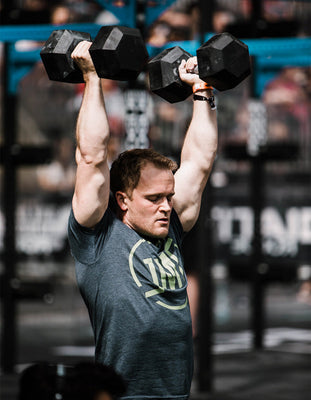
CrossFit: A sport that combines explosiveness, strength and repetitions at the highest intensities and therefore responds particularly well to creatine supplementation.
What additional effects does creatine have?
In addition to its muscular component, creatine also has an effect at the neuronal level. It supports nerve cells and influences the cellular energy supply in the brain. Although the blood-brain barrier only allows limited creatine to pass through, research suggests that it also supports cognitive processes, which may be at least partly related to the supply of ATP to brain cells. In elite sport, creatine is therefore increasingly being discussed in the context of sports that carry an increased risk of head injuries like brain concussions.
What are the benefits of creatine outside of competitive sport?
An active, mobile lifestyle with regular strength and endurance training contributes to muscle maintenance, functionality and brain plasticity. Creatine supports these processes by optimising energy supply in various everyday situations. Studies show that creatine also accelerates cognitive functions such as thinking and reaction times – an aspect that is becoming increasingly important in terms of healthy ageing. Greater agility, better responsiveness and higher mental alertness promote long-term physical and mental performance.
What role does creatine play in a meat-free diet?
Creatine either comes from the body's own synthesis or is absorbed through the diet – almost exclusively from meat and fish. Vegetarians and vegans have lower creatine stores on average. Supplementation allows for targeted compensation and can support both physical and cognitive functions.
What do long-term studies say about the safety of creatine?
Previously, it was recommended to pause taking creatine after twelve weeks. This was because it was not known whether the body's own synthesis would be inhibited by prolonged creatine intake. We now know that this is not a problem, even after more than a year of creatine intake. Long-term studies have shown that in healthy people, a daily intake of 3–5 g of creatine over months or years has no negative effects on liver or kidney function (1).
High-quality, pure creatine from SPONSER
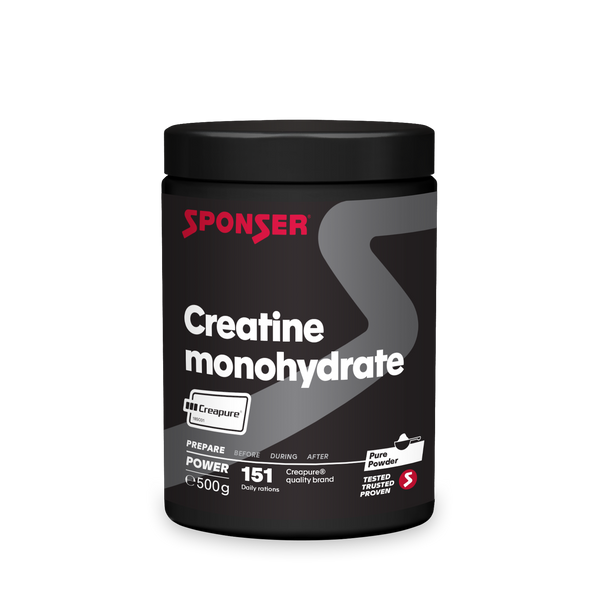
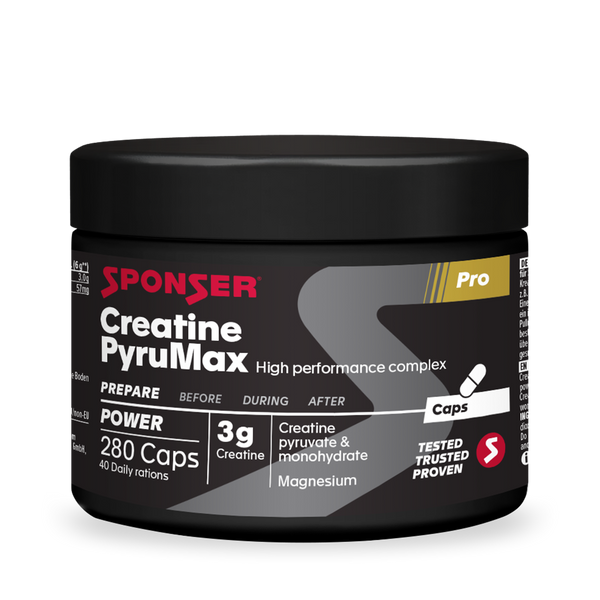
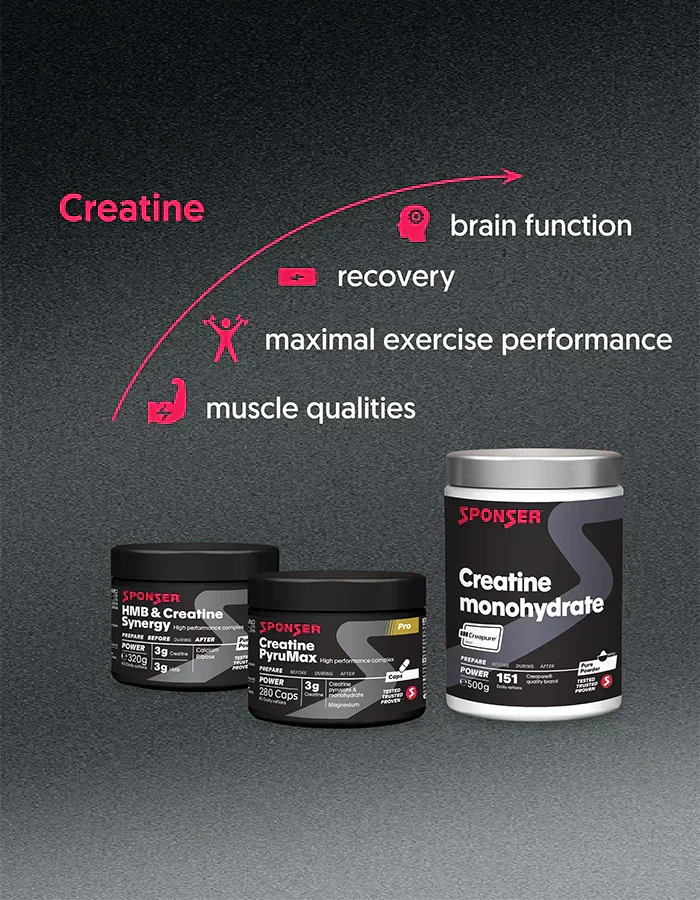
Creatine is much more than a muscle supplement. It is a universal energy buffer system that plays a central role in various tissues such as muscles, the brain and the heart – scientifically proven, safe and versatile. SPONSER uses a patented, high-purity German quality creatine monohydrate in its product of the same name, which is free from impurities, additives and heavy metals.
Literature
1) Kreider RB et al. (2025): Creatine supplementation is safe, beneficial throughout the lifespan, and should not be restricted, in: Front Nutr. 2025 Apr 4;12:1578564.