
























Photo credit: Soyum/Pexels
Optimal Effect on Muscles: From 1.6 Grams Per Kg of Body Weight Per Day
Notabene Nutrition is the new Swiss centre of excellence for healthy lifestyles with a focus on nutrition . It is based exclusively on the latest research findings and is independent of government institutions. In its Quick Facts on the topic of «Recommended daily protein intake for healthy adults» (Empfohlene tägliche Proteinzufuhr für gesunde Erwachsene), written by renowned nutritionist Dr. Paolo Colombani, Notabene Nutrition explains the latest research findings and makes scientifically based recommendations for protein intake in adults:
The protein intake currently recommended by the European Food Safety Authority (EFSA) was published in 2009 and is 0.83 grams of protein per kilogram of body weight per day for people aged 18 and over. (Higher values apply to pregnant/breastfeeding women.) The Swiss Federal Administration deviates from the EFSA for people over 65, recommending 1.0 to 1.2 grams per kilogram of body weight per day. The current recommendations are based on a single literature review from 2003. Even then – and even in the review itself – significant shortcomings in the methodology used to derive the recommendations were pointed out. The current recommendations are therefore based on data that was already scientifically questioned at the time of its publication.
Minimum versus optimal protein intake
According to current research findings, the protein intake at which there is a high probability that no net loss of body protein will occur is approximately 1.2 grams per kilogram of body weight per day; 0.83 g/kg body weight is not sufficient for a balanced balance. If a minimal or deliberately low protein intake is desired, these 1.2 grams per kilogram of body weight should therefore be used as the new reference.
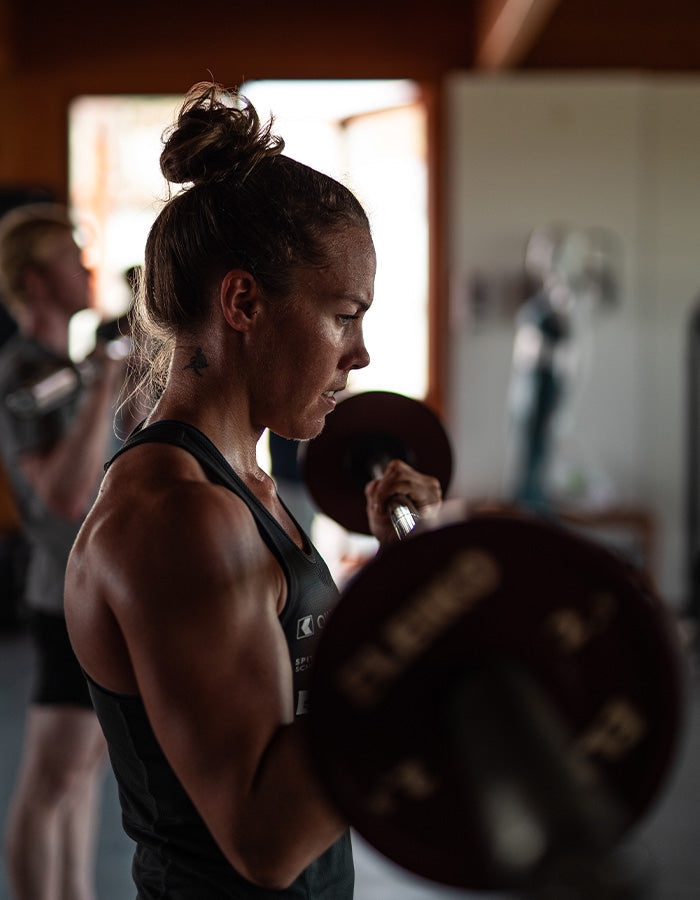
Current research on protein intake focuses on the effect of dietary proteins on the formation of body proteins – both in the entire organism and specifically in the muscles. A summary of the relevant studies on adults aged 18 to 65 leads to the following conclusion: in women, the optimal effect on the muscles is achieved with a protein intake of 1.6 to 1.9 grams per kilogram of body weight per day, while in men the optimal range is 1.6 to 2.1 grams. These values refer to a lifestyle involving simultaneous strength training – an element that is considered part of a healthy lifestyle and is therefore taken into account in general recommendations. According to current knowledge, a higher protein intake does not provide any additional benefits.
Is it possible to consume too much protein?
As a matter of fact and basic dietary principle: , the intake pf any nutrient can be too low, but also too much. However, no maximum intake has yet been established for dietary protein above which negative effects occur. One possible approach to determining such a maximum intake would be the liver's ability to break down the components of proteins, the amino acids, into urea. The liver is capable of breaking down the equivalent of just under 5 grams of protein per kilogram of body weight per day into urea. However, such a high protein intake seems pointless, if not impossible altogether.
Summary
Those who strive for an optimal daily protein intake should aim for an intake that is at the upper end of the recommendation, but certainly at least 1.6 grams per kilogram of body weight. Those who generally prefer a low protein intake but do not want to risk a net loss of body protein should aim for the lower end of the recommended range of 1.2 grams per kilogram of body weight per day.
Literature
Colombani P. (2025): White Paper: Über Nahrungsproteine in der Ernährung von gesunden Erwachsenen, hrsg. von Notabene Nutrition, Version 1.01. November 2025.
>> Notabene Nutrition Newsletter with supscription to a «new article» alert